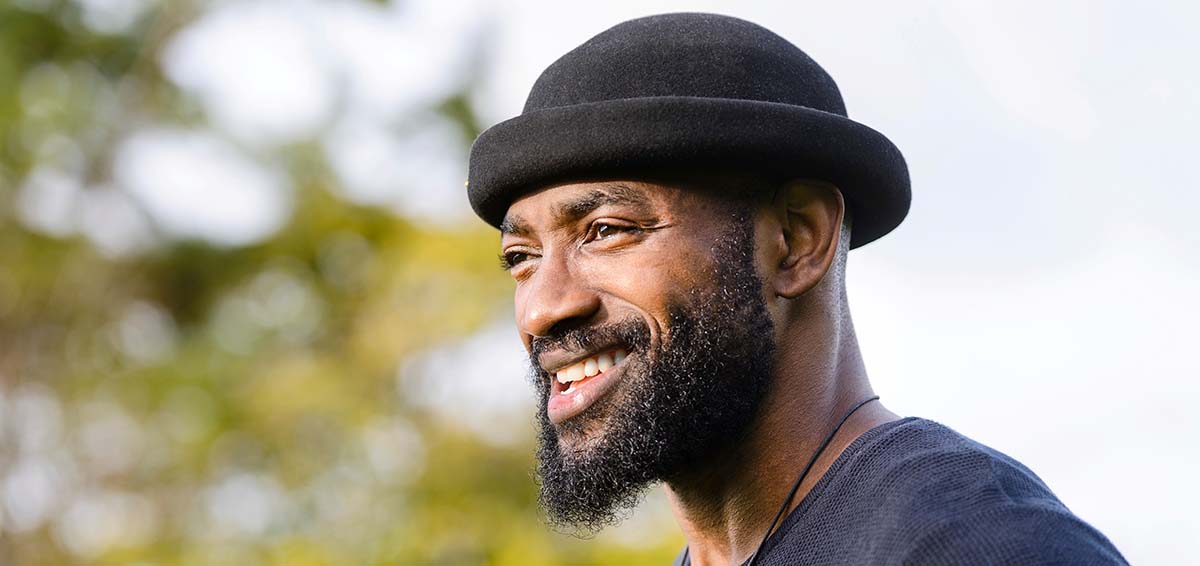

We caught up with Dickson about growing up in East London, the places that shaped him, his Cameroonian heritage and why bringing TELLUS to Stratford feels like coming home.
You grew up around Stratford – do you still spend much time in East London?
East London will always feel like home to me. I was born in Cameroon, but East London is where I grew up and where so much of who I am today was formed. My family still live in East London, around Barking and Dagenham and Newham, and I still have friends and people I’ve known for many years there. So, whenever I come back, there is that sense of familiarity.
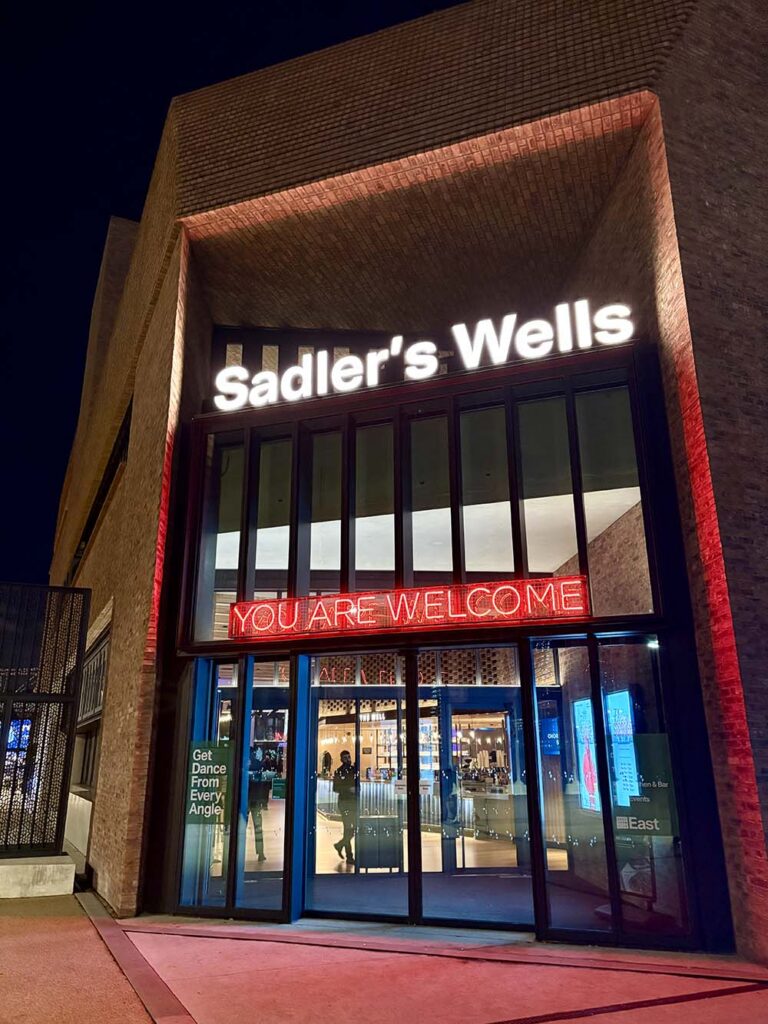
That’s why bringing TELLUS to Sadler’s Wells East in Stratford is quite emotional for me. My career has taken me all over the world, but now I’m bringing one of the biggest works we’ve created back to where so much of my journey began. It really does feel like coming home.
Are there any places in East London that you have particularly fond memories of – somewhere you used to go as a child, a favourite spot, or somewhere that still feels like home when you’re back?
There are actually so many places that bring back memories for me. As a child, I remember playing football in several parks, food shopping in Upton Park, going to Billingsgate fish market with my dad at 5am on Saturday mornings, playing basketball in Goodmayes and South Park, and later training in street dance at the Hartley Centre. I also remember going down Barking Road and getting £1 pizza – those small things really stay with you.
Stratford Circus was another important place for me. If I’m being completely honest, sometimes I went there for the girls! But I also went for dance, and I remember going to the Stratford Picture House as well.
Those places remind me of being young and discovering who I was. East London was such a mixture of cultures, music, sport, dance and people, and I think that mixture has stayed with me as an artist. I was born in Cameroon, grew up in East London and found my way into popping and hip-hop culture here. In many ways, East London taught me that all those different worlds could exist together.
East London has changed enormously since you were growing up in Stratford. When you come back now, what feels familiar and what feels completely different?
Yes, it has changed a lot. Some of the places and little things I associate with growing up here have disappeared. There’s no more £1 pizza on Barking Road, Stratford Circus has changed, the Picturehouse I knew is no longer there, and even Billingsgate fish market is eventually moving from the place I remember going to with my dad.
These might seem like small things, but they were part of my East London and hold a lot of memories for me.
Physically, Stratford has completely transformed. Sometimes I come back and honestly think, “Where am I?” There are buildings and whole areas that simply didn’t exist when I was growing up.
But what still feels familiar is the people and the multicultural energy of East London. There’s still this incredible mixture of cultures and creativity.
And now there’s something new that feels very special to me – Sadler’s Wells East. As a young person growing up around Stratford, I could never have imagined that one day I would return with my own company and present a work of this scale here.
I hope a young person from East London can come to TELLUS, see themselves represented on that stage and think, “Maybe I can do that too.”
You performed Enowate at Angel back in 2022, which went on to win you an Olivier Award. What do you remember about that time, and how does it feel looking back on how much has happened since?
Enowate was incredibly personal. It came from returning to Cameroon and visiting my parents’ village. That journey completely changed my understanding of my heritage, my ancestors and ultimately myself.
When we performed it at Sadler’s Wells in 2022, I definitely wasn’t thinking about winning an Olivier. I was just trying to be truthful and make the best work I possibly could.
Winning the Olivier the following year was extraordinary and something I’ll always be grateful for. But looking back now, what Enowate really gave me was confidence in my own artistic voice – to trust where I come from, trust my instincts and not be afraid to make work that is deeply personal.
I think that confidence has carried into TELLUS. It has allowed me to dream a little bigger, bring more people into the work and keep exploring the stories and ideas that are important to me.
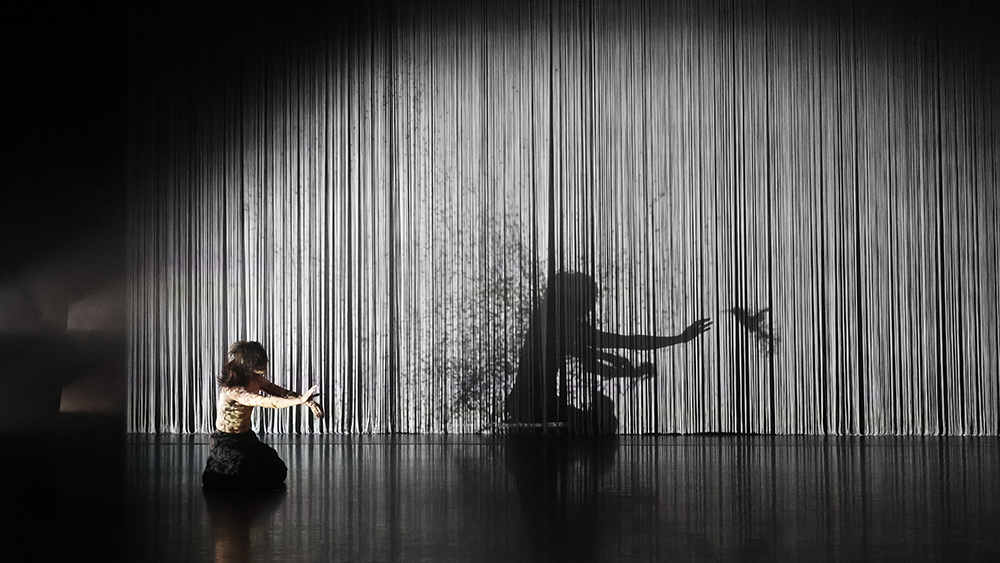
TELLUS is your company’s first ensemble work. What made now feel like the right moment to take that step and bring more dancers into your world?
I think it came from feeling ready to open up the work and bring more people into the creative process. Until now, much of the company’s work has been quite intimate, but I’ve always loved working with larger groups of dancers when creating for other companies.
With TELLUS, I wanted to bring that experience into my own company and see what becomes possible when you have more voices, bodies and individual experiences in the room.
We have eight to nine dancers of global heritage, and each person brings something of themselves to the work. That’s very important to me because I don’t want everyone to move or express themselves in exactly the same way.
It also feels like a natural next step for the company. We’re becoming more ambitious in the stories we want to tell and the scale on which we want to tell them.
The idea for TELLUS came while you were trying to tell your son a bedtime story. How did that very personal moment turn into a work about climate, humanity and our relationship with the Earth?
It really did start with me trying to put my son to sleep. I found myself going back to some of the folk stories my parents used to tell me when I was a child – stories I probably didn’t fully understand, but that somehow stayed with me.
In 2023, there was so much noise in the world. Everything felt quite overwhelming, and in that moment all I wanted to do was shut everything out and put my son to sleep. There was something about that very simple and intimate moment that stayed with me.
As I started developing the story, I became interested in this idea of a young person entering a world where the land is suffering and there is no water. That naturally opened up questions around drought, climate and how we treat the Earth.
My Cameroonian heritage began to find its way into the work too, particularly through the folk stories of Mami Wata and the relationship between people, water, nature and the spiritual world.
But underneath all of that, it’s still a story that began between a father and his son. I think there’s something really special about taking the stories and lessons that were passed down to me and finding my own way of passing something on to the next generation.
Did becoming a father change the way you think about the stories you want to tell through dance?
Absolutely. Becoming a father has changed me in ways I’m probably still discovering. It has made me more sensitive, a bit more patient, and maybe more aware of the small things that we sometimes overlook.
I think a lot of my work has come from looking inward – trying to understand myself and the experiences that have shaped me. I still do that, but having a son has made me look outward a bit more than I normally would.
I think more about what we leave behind, the world we live in, imagination and hope. When you see the world through a child’s eyes, things you’ve stopped noticing suddenly become interesting again.
That has definitely found its way into TELLUS. I still want to ask difficult questions through my work, but I’m also interested in creating space for wonder and possibility.
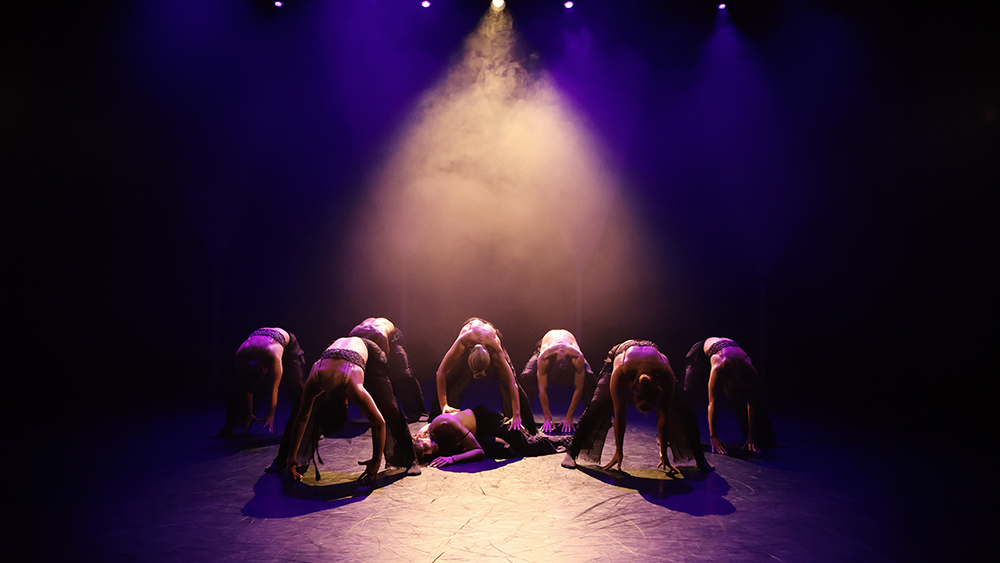
Your Cameroonian heritage is an important part of TELLUS. What stories, traditions or ideas from your childhood have stayed with you and found their way into your work?
One of the strongest things is the idea that the natural and spiritual worlds are connected.
When I returned to my family’s village in Cameroon, things I had heard about or experienced growing up suddenly made more sense. There was a relationship with the ancestors, nature and the land that isn’t separated in the way we sometimes separate those things here.
That became important in Enowate and continues into TELLUS.
With TELLUS, I was particularly drawn to Mami Wata, the goddess of water, and the idea of her power – something that can give life but can also bring destruction.
I’m not trying to recreate these folk stories onstage or say, this is what Cameroon is. It’s much more personal than that. I’m drawing from the stories, memories and traditions that have stayed with me and bringing them together with everything else that has shaped me – growing up in East London, street dance, contemporary dance, music, and all the people and places I’ve encountered along the way.
At the heart of TELLUS is the idea that humanity has forgotten how to worship and protect the land. What does our relationship with nature mean to you personally?
I’ve always felt that things carry energy – water, land, buildings, spaces and people.
Sometimes we speak about nature as if it exists somewhere separate from us. But we are nature. The water we drink, the food we eat and the air we breathe all come back to the Earth.
When I use the word worship, I don’t necessarily mean religion. I mean respect. Recognising something greater than yourself and understanding that you have a responsibility towards it.
Maybe we’ve become so focused on what we can take from the Earth that we’ve forgotten to ask what we should give back.
‘TELLUS has incredible dancers, live musicians and a whole visual world, so there is a lot to experience. But underneath all of that is a very human story about our relationship with each other and with the world around us’
The work explores some pretty big subjects – climate change, drought, displacement and our responsibility to the planet – but it’s aimed at audiences aged seven and up. How do you make those ideas accessible without talking down to children?
Children understand much more than we sometimes give them credit for.
I don’t think we have to explain everything to them. Instead, we create a world they can enter – a young person on a journey, a Goddess, a village, drought, water, music and movement.
A seven-year-old might experience TELLUS as an adventure or a magical story, while the adult sitting next to them might recognise questions about climate change, displacement and responsibility.
That’s what I love about the stories I heard growing up. As a child you enjoy the story, then you get older and suddenly realise there was another meaning underneath it.
I don’t want to tell children what to think. I’d like them to feel something, use their imagination and ask questions.
Dance can communicate things that words sometimes can’t. What can movement say about the climate crisis or our connection to the natural world that a more traditional piece of theatre might struggle to express?
That’s one of the reasons I dance.
Sometimes I feel words aren’t enough to express everything I’m feeling. Movement can communicate something before you’ve intellectually understood it.
With climate change, we hear so many facts and statistics. They’re important, but sometimes we become numb to them.
Dance makes things physical. You can see a body struggling, people searching for water, a community supporting one another or someone being separated from the land.
You don’t necessarily need someone to explain it. You feel something first.
And maybe that feeling is where empathy begins.
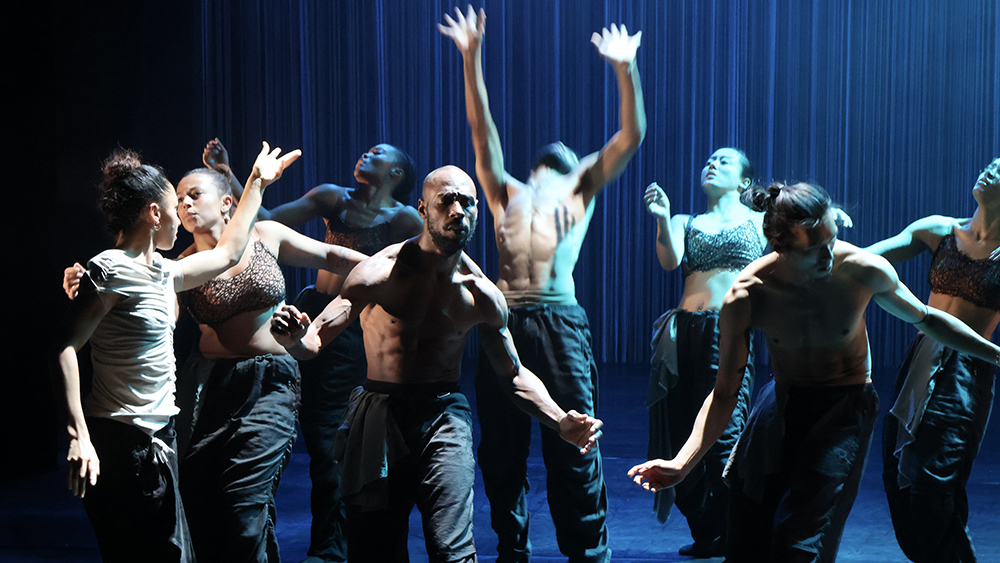
You’ve described TELLUS as a journey towards healing and restoring balance. Do you think art and storytelling can actually change the way people see the world – or perhaps simply make us look at it differently?
I absolutely believe art can shift something inside people.
You can sit in a theatre for an hour and experience somebody else’s world. Maybe you recognise yourself in someone who appears completely different from you. Maybe an image stays with you, or a piece of music makes you remember something. Maybe you leave asking a question you weren’t asking when you arrived.
For me, great art connects us. It can expand our perspective, build empathy and remind us of our humanity.
And sometimes change begins quietly.
Finally, if a family from East London is wondering what to see this October half term, what would you like them to take away from TELLUS when they leave Sadler’s Wells East?
I would love for them to leave feeling that they’ve experienced something together.
TELLUS has incredible dancers, live musicians and a whole visual world, so there is a lot to experience. But underneath all of that is a very human story about our relationship with each other and with the world around us.
I don’t necessarily want people to leave with one particular message. I’d rather they leave feeling something – maybe they’re moved, maybe they have questions, maybe a child sees something onstage that sparks their imagination.
And for me, bringing this work to Stratford makes it even more special. I grew up around here, so the thought of families and young people from East London coming into Sadler’s Wells East and experiencing TELLUS means a great deal to me.
If they leave the theatre still talking about what they’ve seen and felt, then I think we’ve done something cool.
DON’T MISS Dickson Mbi TELLUS, running at Sadlers Wells East from 21 – Saturday 24 October 2026
BUY TICKETS
FOLLOW BEAST MAG @beastmag_london